Birds…and other wildlife.

In my neighborhood in Raleigh there are many pockets of woods and wild areas. I have seen everything from hawks, coyotes, and some kind of large rodent. It was either a beaver or a nutria. I am not sure but it was big!

I have several feeders around the patio to feed the many birds in the neighborhood. There is even a small swamp area about a mile away on the Walnut Creek flood plain. The creek runs just South of my neighborhood. It begins at Lake Johnson, runs through NCSU’s Cenntinial Campus where it is dammed to create Lake Raleigh, than it continues to run East just inside the beltline along I40 until it runs through Walnut Creek Park and then it empties into the Neuse River after it goes under Barwell Road. Part of the Raleigh Greenway takes the same course.

The Raleigh Walnut Creek Wetlands Center is located on State Street. 59 acres of wetlands and an education center. http://www.raleighnc.gov/arts/content/PRecRecreation/Articles/WalnutCreekWetlandCenter.html

I have seen many species of birds from geese flying over the neighborhood to hawks hunting the very plentiful squirrels. Even a few of the very large and rare Pileated Wood Peckers.

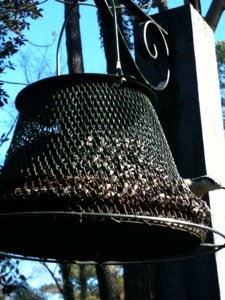
The squirrels are the most problematic. They will chew anything they can! They have chewed holes in nesting boxes. Holes in lids to the garbage cans. Destroyed any plastic feeder but I have found these wire feeders that have survived their assault. I keep then filled sunflower seeds.

20121206-095608.jpg

I also have a few of the sock feeders for thistle seeds.

20121206-095724.jpg

A Nuthatch enjoys sunflower seeds.

20121206-095802.jpg

Another Nuthatch peaking from behind the feeder.
20121206-095852.jpg

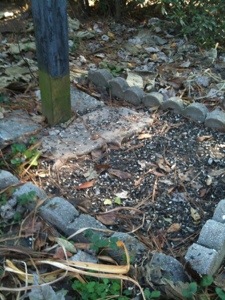
There is the seed catch area below the feeders. Mourning Doves and other ground-feeding birds enjoy eating here.
20121206-103340.jpg

1 Comment

Filed under wildlife

Harvesting culinary ginger.

The first hard frost was this week. When I say hard I mean 25f. Our typical winter temps are about 25f to 30f at night and in the 30s or 40s during the day.

Frost has killed the foliage of the culinary ginger in the garden so it’s time to harvest the roots. It’s a shame, though, because one plant was beginning to bloom and its the first time I have had that to happen.

Below is the bud and a small pink flower was peeking out the day before the frost.

20121201-102008.jpg

The plants are now mushy from frost and have fallen over.

20121201-102143.jpg

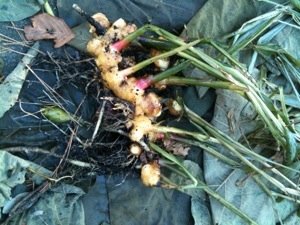
I simply pull and the root comes up.

20121201-102235.jpg

I rinse the soil off in a bucket of water then pour the water and soil back into the garden bed.

20121201-102355.jpg20121201-102417.jpg

Now I need to trim off the roots and clean the remaining soil by hand.

20121201-102526.jpg

Ginger will last about two months in your vegetable crisper in a zip lock bag. You can also freeze it in small portions so its ready to use. Other methods are storing is to store it in jars of vodka as if its pickled. I might have to try that one!

20121201-102948.jpg

Namaste’

4 Comments

Filed under Food, Plants

What’s up with the piles of leaves in the street?

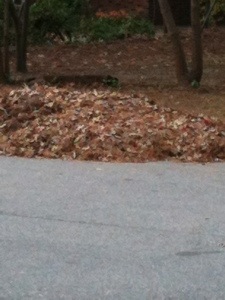
Every Fall when the piles of leaves appear on the streets I wonder why people are throwing away that good mulch and compost? My neighbor’s pile is about 20 feet long, three feet high, and five feet wide.

20121120-180500.jpg

In the Spring these people spend hundreds of dollars on bags of mulch and compost.

Here on the East side of Raleigh there are about 2 to 4 inches of sandy topsoil over the red clay base. Mulching with the oak, maple, and sweet gum leaves, as well as pine straw, improves the moisture retention and drainage of the soil, decreases weeds, and as it decomposes, releases nutrients into the soil.

You can easily create a compost pile in the rear of your back yard by just piling the leaves and turning them a few times during the Summer. Or purchase a simple plastic compost bin for about $50 then you can also add your kitchen scraps from the fruit and vegetables you eat.  Statistics state we throw away 27% of the food we buy! http://feedingthelandfill.webnode.com/food-waste-statistics/

20121120-215105.jpg

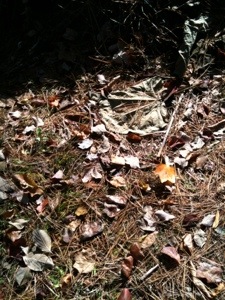
After only one season it decomposes into a nice mulch.

20121121-123937.jpg20121121-124000.jpg

And, of course, Gus loves to sit in the sun when we are out in the garden during cold but sunny days!

20121121-124133.jpg

***********************************

Leave a comment

Filed under Seasonal Maintenance