Really? Lowe’s is selling the awfully aggressive and invasive Japanese Honeysuckle?

I was strolling through a Lowe’s Home Improvement store this morning and froze in my tracks when I saw this. I was going to call the police but I am not sure it is illegal or not here in Raleigh, North Carolina?

20130515-173602.jpg

I was like: “You have got to be kidding?”. I fight this plant every season creeping over from my messy and weedy neighbor’s property that is covered in English Ivy, poison ivy, and honeysuckle. My neighbor’s trees are covered. I have to spend hours cutting it off my fence all Summer long.

I am close to organizing a protest at Lowe’s! I am still in shock that their buyers don’t know what they are purchasing!

I am going to have to write a letter!
***

29 Comments

Filed under Pest, Plants

Stracciatella with kale.

On Saturday mornings at Rebus Works there is The Saturday Market which brings together local farmers and sometimes crafters near Downtown Raleigh. I stopped by there Saturday morning and picked up some kale along with a few other things. They also have a large urban vegetable garden and chickens. I always love checking those out, too!

may 032

Stracciatella with kale

If you love egg drop soup you will love Stracciatella with kale. Stracciatella is an Italian or Roman-style Egg Drop Soup. My recipe has a strong flavor which is given by the kale. If you want a milder flavor you may use a milder green. You may also reduce the water/stock ratio to equal amounts to reduce the chicken flavor. Vegans/Vegetarians may substitute vegetable stock.

Ingredients:

  • 4 cup chicken stock (one box)
  • 1 cup water
  • 1/3 cup shredded cheese
  • 4 cups Greens that have been torn into ribbons
  • Two eggs
  • Salt
  • Pepper

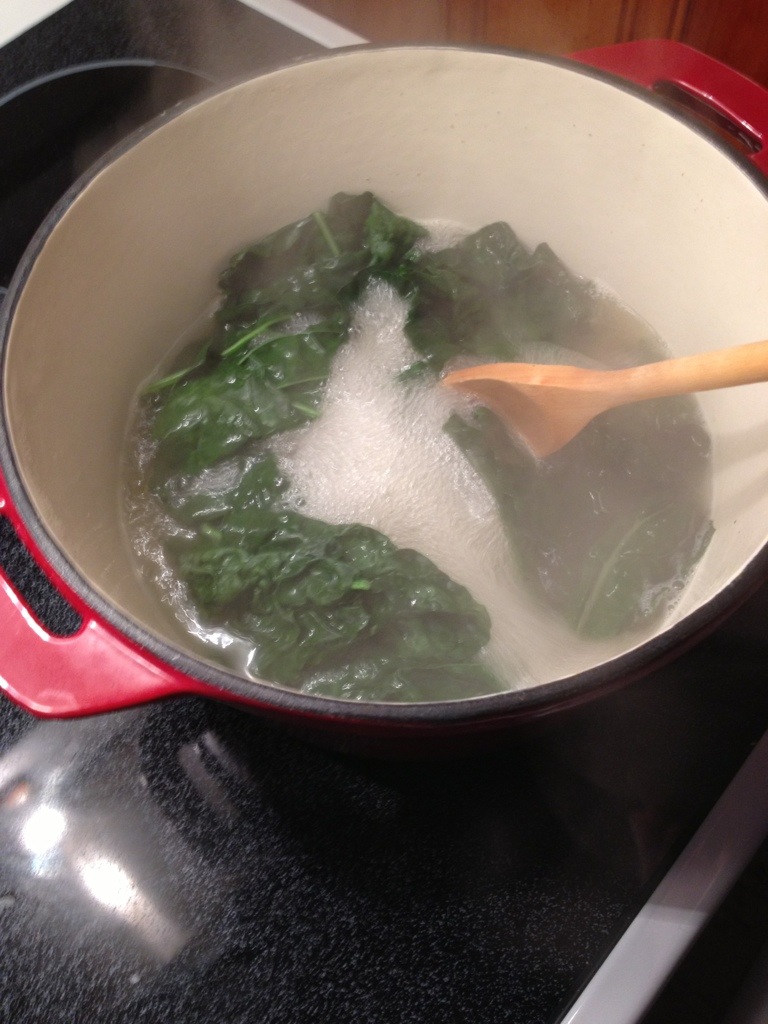
1) Bring the water and broth to a boil.  Reduce to a simmer and add the greens.

20130512-101823.jpg

2) After about 8 minutes the greens should be tender. Add the shredded cheese and stir to incorporate as the cheese melts.

20130512-102511.jpg

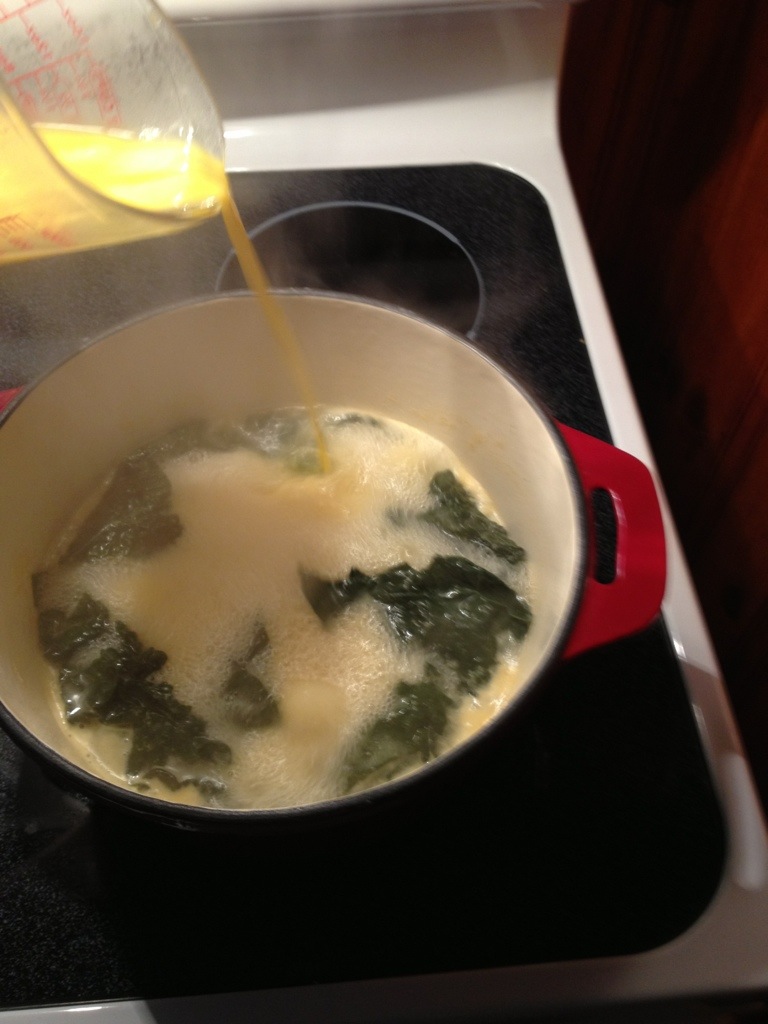
3) Bring the soup back to a boil. Beat two eggs in a measuring cup. Quickly stir the soup to get it spinning in the pot. Drizzle the eggs into the soup in a thin ribbon.

20130512-102639.jpg

4) Remove from heat and keep stirring to break the eggs up. The eggs will cook as soon as they hit the hot soup.

20130512-102826.jpg

5) Salt and pepper to taste. Serve with an Italian loaf!

20130512-102905.jpg

You may add nutmeg or ground chipotle for a bit of a ZING! A small chili would work, too! Hmm, even a squirt of Sriracha would be nice, as well.

***

10 Comments

Filed under cooking, Food

They’re back!

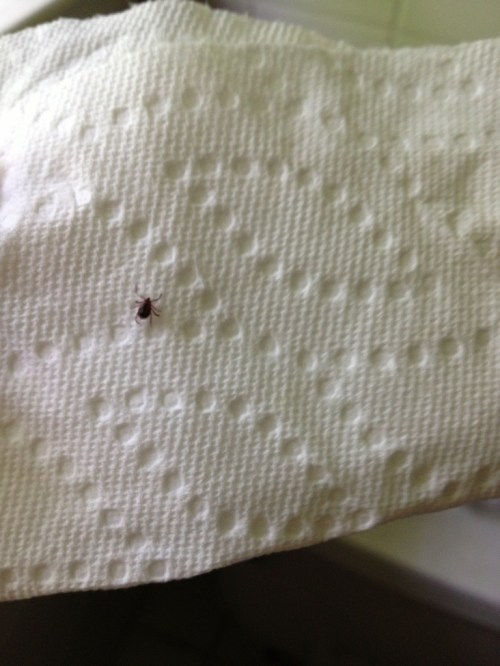
There is a little creature who has been around for millions of years. They are the bane of every outdoors person. I am talking about ticks!
20130510-130015.jpg

The return of warm weather also signals the return of the tick. Ticks are arachnids so they have eight legs just like a spider. They have four stages of development and during each stage they must take a blood meal to complete the stage. They usually use a different host species for each stage.

Once they find a host the female may feed for 8 to 10 days and increase her weight by 100 times. She drops to the ground, lays about 1000 eggs. She then dies.

The eggs hatch in about two weeks and the cycle begins all over again.

There are at least four species of ticks in North Carolina and they may transmit several diseases. Rocky Mountain spotted fever and lime disease are the most common tick-borne diseases but there is also Ehrlichiosis, which is becoming more common in humans.

A new tick from South America has appeared recently in the South East, Ixodes Affinis. It does not host on humans but can increase diseases in animals which could be transmitted to humans.

How to protect you and your animals.

1) Check you and your pets several times a day, especially when you have been outside. One way the females find a host is by climbing to the end of grasses or the edge of the leaves on shrubs and hold out their legs until an animal comes by and their hooked legs latch on to fur or clothing.

2) Use a insect repellant. Be sure to spray your legs, arms, and back of your neck.

3) Immediately wash all your clothes that you wore while outside. Ticks can live for weeks between feedings. If you put your clothes in the hamper the ticks will just crawl around your house until they find a host!

4) Spray your yard and shrubs with an insecticide. Also, the sides of the house up to the bottom of the windows. Ticks lay their eggs in leaves, mulch, or in the cracks of rocks and buildings.

If you do find a tick feeding on you:

Remove it with tweezers grasping it at the head where it attached to the body. If she does not come out easily you can put fingernail polish or antibiotic ointment on its rear end. It will be unable to breathe and will detach in a few minutes. The only safe place to dispose of a tick is by flushing it in the toilet.

If you experience a rash at the site of the bite or flu-like symptoms report to a doctor immediately. Early treatment is important for all tick borne diseases!

***

3 Comments

Filed under Pest