Plentiful rain and a ferry trip to Ocracoke Island and Hatteras Island.

It was my birthday May 1st so I decided I wanted to take a trip to Ocracoke and Hatteras Islands. My favorite part of the trip is the 2 and a half hour ferry ride from Cedar Island to Ocracoke Island. It crosses Pamlico Sound and for part of the trip there is no land in sight. The Sounds are the bays created by the string of the Outerbanks islands which skirt the North Carolina coast. The open bodies of water were named Sounds by the Irish settlers because the water was quiet and calm or “sound”.  It’s rather peaceful and the constant hum of the ferry engines encourages a nap!

You can also feed the seagulls off the stern of the ferry or sometimes talk to the locals. They have a local accent called “the DownEast brogue”. It reminds me of a heavy Irish accent. Sometimes they are very difficult to understand, not only for the accent, but also for some of the Old English words they use. They are descended from Irish fisherman who settled the coastal areas. The maternal side of my family is descended from the O’neals of Ocracoke. Of course, back then the boat only came once a week and this explains why my grandmother had twelve bothers and sisters. Most were involved in fishing at some point in their lives.

With the collapse of the fishing industry tourism is the major mode of income now.

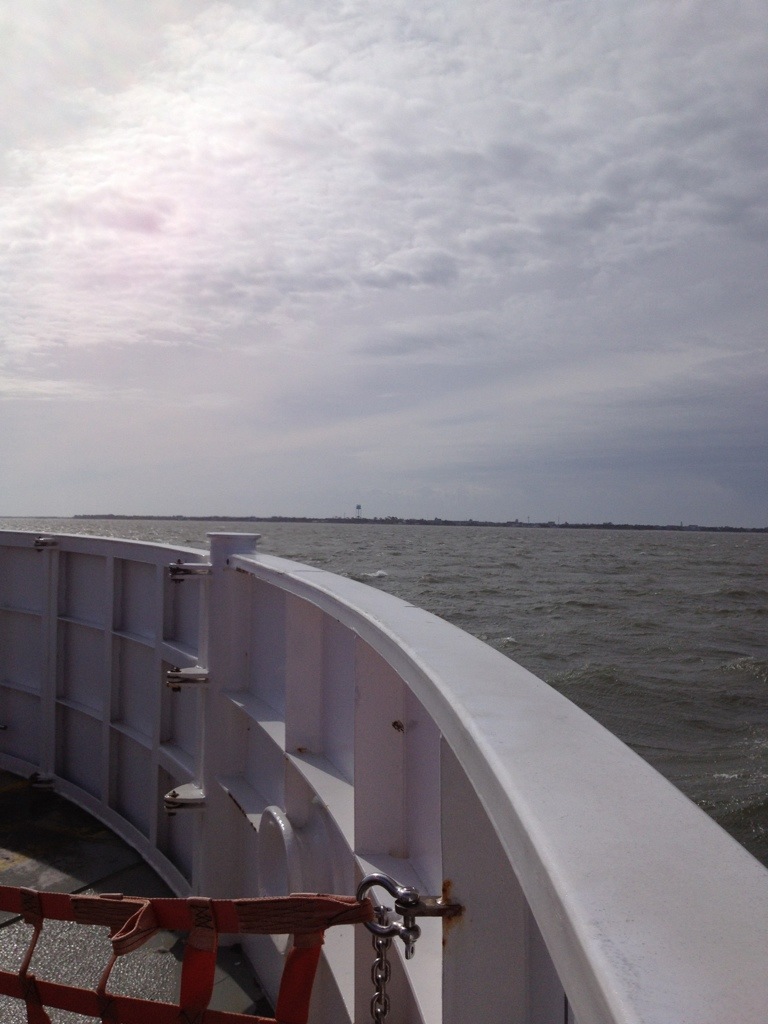
The weather was windy with spotty rain. On the thousands of trips I have made as a child with my family, then later with friends, this trip was the most rough ferry ride I have ever experienced! The ferries rocked and my car, which was first on the ferry and loaded on the bow of the boat, was splashed many times with waves of water from the Pamlico Sound.

Because of the off season timing and state budget cuts the ferry schedule is reduced. Andy and I missed the last ferry back to the mainland at four PM and had to stay in one of the small hotels: Blackbeard’s Inn.

The area was a favorite place for the pirate Blackbeard to hide his boat and his name is on many businesses out there. His ship sank not too far away and he was decapitated by the British.

There is not much to do in the off tourist season. Everything closes at dusk! No coffee shops! Thus, we watched Hoarders all evening! Nothing makes me feel better about my house cleaning skills then watching five hours of Hoarders!

——————————————————————————————–

The ferries at the Cedar Island ferry landing as we were leaving the dock.

20130508-145948.jpg

The wide open waters of Pamlico Sound as the ferry was approaching Ocracoke Island and the Village of Ocracoke after the two-and-a-half hour ferry ride.
20130508-150056.jpg

The Versa on the deck of the “Sealevel” ferry. The ferries have lobbies that are above the deck but Andy and I usually remained in the car napping or reading. Each ferry is painted the color of a North Carolina University. It just so happened that the Sealevel is painted the colors of ECU (East Carolina University) where I attended for undergraduate studies.

20130508-150201.jpg

Approaching Ocracoke Island and the village of Ocracoke. The harbour is called Silverlake.  You can see the Ocracoke Lighthouse which was built from 1798 to 1823. It’s 75 feet tall and 25 feet wide at the base.

20130508-150614.jpg

Here is a closer view of the Ocracoke Lighthouse with Andy standing in front.

20130508-150956.jpg

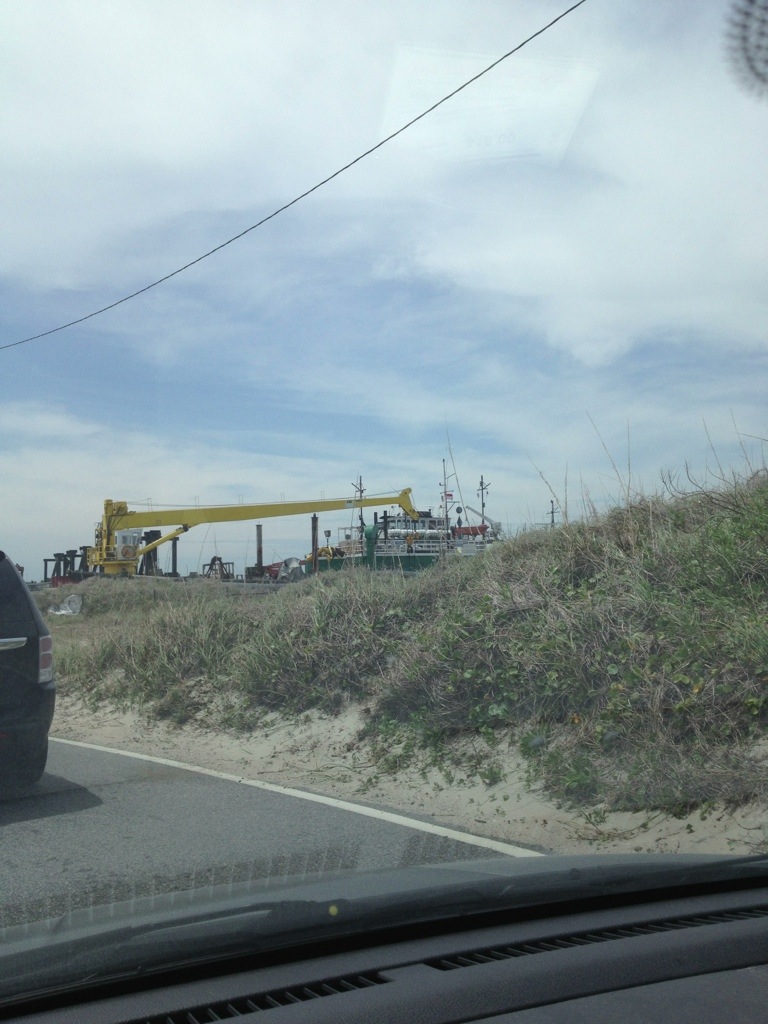
This is a picture of the Hatteras Island ferry at the Northern end of Ocracoke Island. The wind was blowing sand so hard it was caked on the windward side of the car and in the window. The salt in the air speeds rust so much so that most metal will rust overnight! The ride from Ocracoke to Hatteras is usually a shorter 15 minute ride but because of budget cuts the channel has not been dredged in a while so the ferry must take another channel making the ride now almost an hour. This is the reason we missed the last ferry back to Cedar Island and had to spend the night on Ocracoke.
20130508-151129.jpg

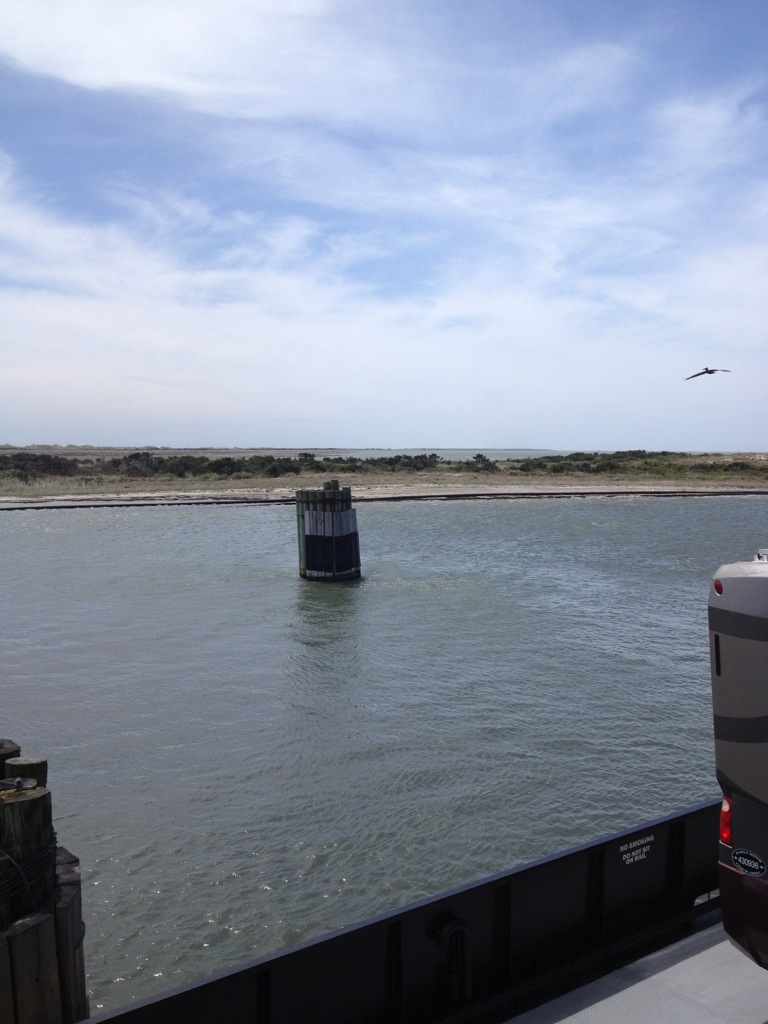
This is the ferry landing on Cedar Island. Because I had not planned to spend the night I did not bring my IPhone charger so my phone died after this picture!
20130508-151527.jpg

I am usually prepared for just about anything but decided to travel light! Wouldn’t you know this would be the one trip where a combination of budget cuts and bad weather would have made my usual packing of an overnight bag and a phone charger an asset!

Lessons learned!

8 Comments

Filed under Travel

I love ferns!

I love ferns. I have many in my garden. Some are clump forming. Some spread quite aggressively and others will form a crown. Here are some of my favorites.

Japanese Silver or Painted Fern (Athyrium niponicum var. pictum) – Beautiful silver and burgundy fronds. Gus is sniffing up something in there!

20130502-090844.jpg

Autumn Fern (Dryopteris erythrosoa) – Named so because the new fronds in Spring, shown here, are a bronze color like Fall foliage.

20130502-091015.jpg

Dixie Wood Fern (Dryopteris X Australis) – a very tall fern that is a natural hybrid.

20130502-092730.jpg

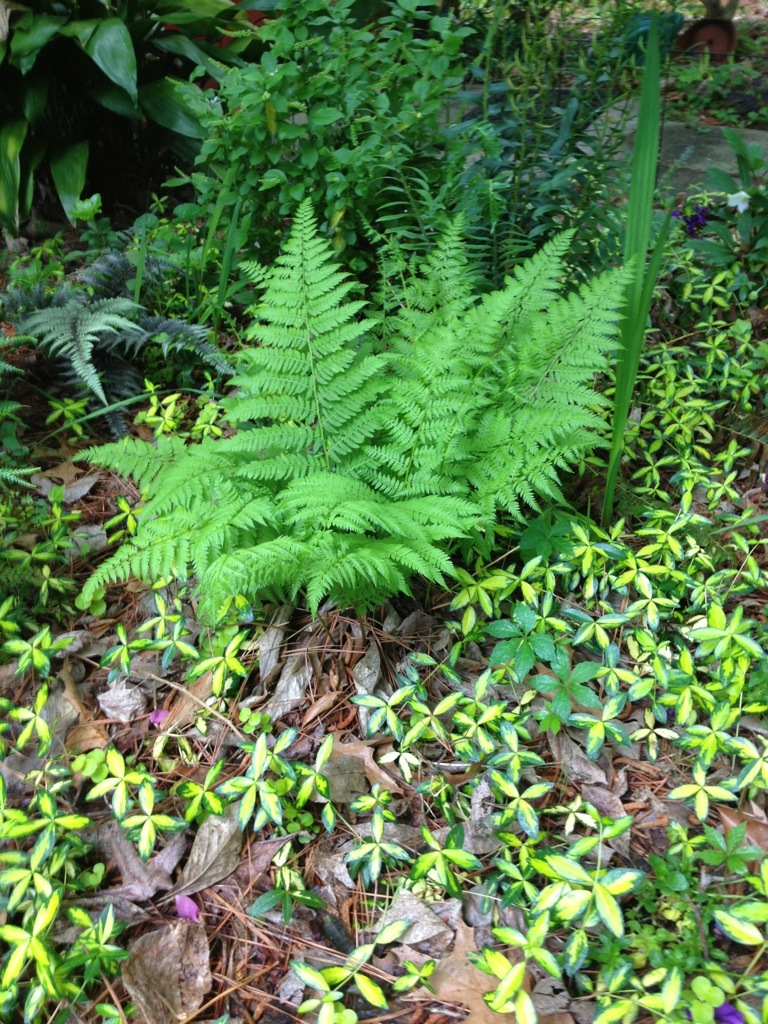
Lady Fern (Athyrium filix-femina) – Named after its very lacy fronds. Behind it to the right is a Christmas Fern. Behind it to the left is a small Japanese Painted Fern.

20130502-092936.jpg

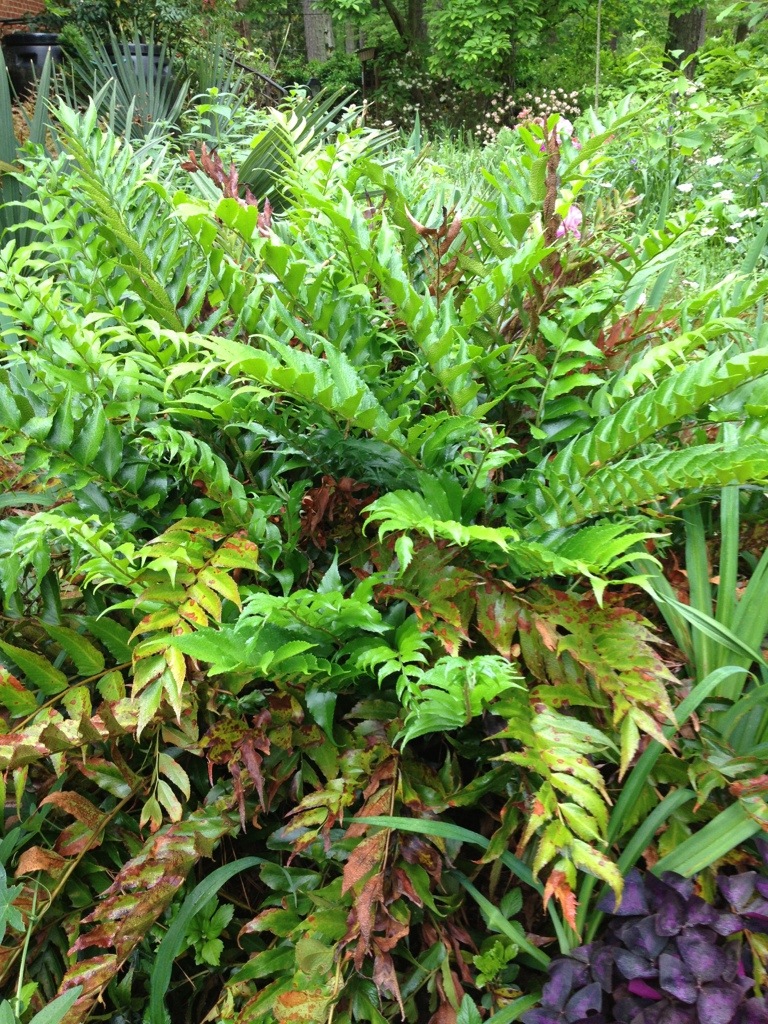
Holly Fern (Cyrtomium falcatum) – I purchased this about 5 years ago in a 5 inch pot and now it is about 2.5 feet tall and three feet wide.

20130502-093302.jpg

Korean Rock Fern (Polystichum tsus-simense) – This fern has a nice netted pattern on the fronds but not much of a grower. Behind it is a small Lady in Red Fern which is a Lady Fern with a red stem.

20130502-093543.jpg

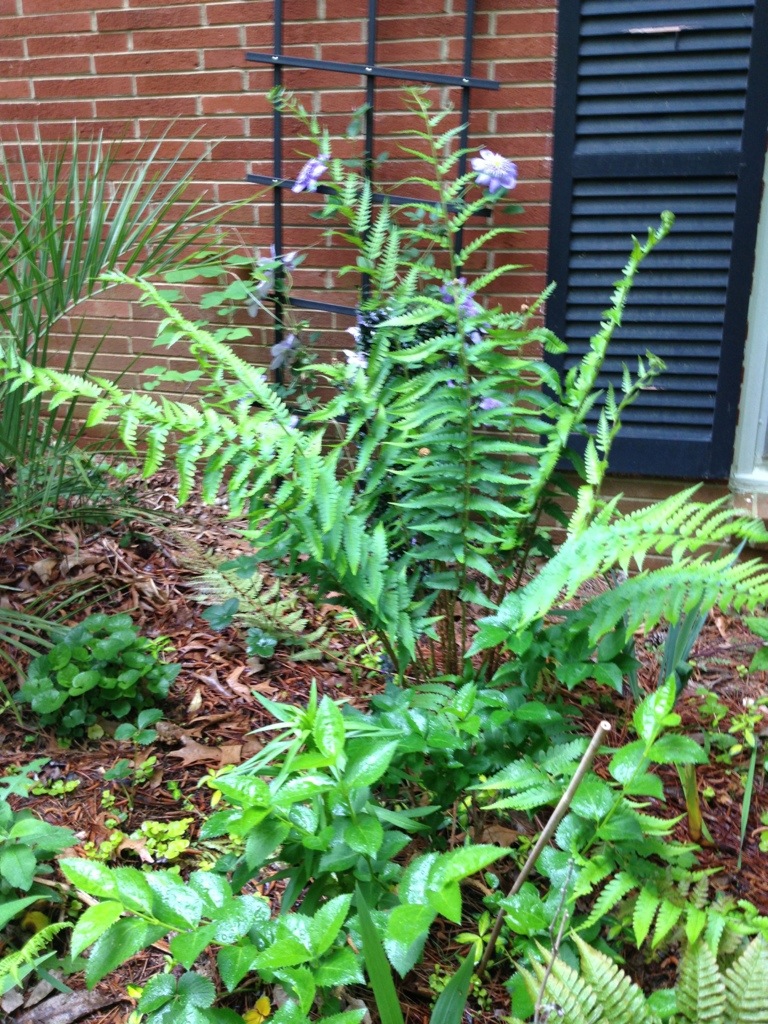
Sensitive Fern (Onoclea sensibilis) – named so because the leaves are killed by the first frost. It also has an unusual fertile frond that sticks straight up like a flag pole and is brown. You can see in the background of this picture.

20130502-105657.jpg

Here in The South it is important to make sure ferns receive enough moisture to survive the heat. Otherwise, they do not thrive and slowly wither away.

Some may spread aggressive when the conditions are right. Sensitive Fern, Hay-scented Fern, and Bracken Fern can all be aggressive when conditions are perfect! Be careful where you plant them!
***

15 Comments

Filed under Plants

What not to plant……….

Now that the US horticulture industry is a nationwide enterprise diseases are able to spread from one coast to the other within a few seasons. In the good ol’ days, when plants were grown locally, this problem was less severe and diseases could be contained or stopped before they became a national epidemic.

This has created a “DO NOT PLANT” list in my mind every time I see one of these plants at a nursery. I have also learned to read labels to see if the location of production is listed.

Here are a few of the plants that are current on my Do Not Plant list:

Roses

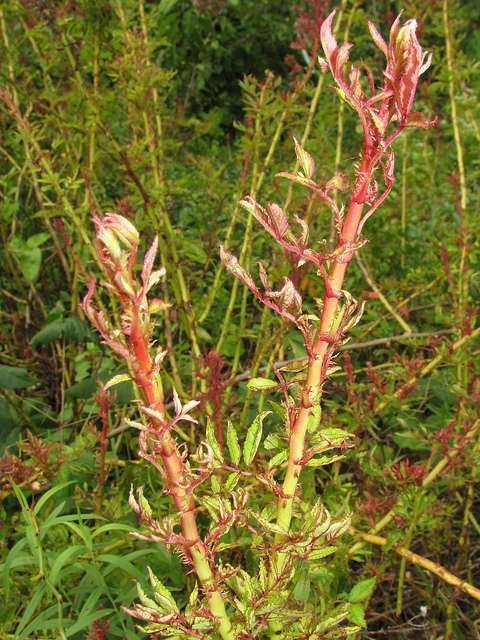
Rose Rosette Virus: Rose rosette disease is a viral rose disease spread by a tiny insect. The virus is specific to roses with Rosa multiflora being its primary host. The disease is sometimes called witches’ broom because of the way it causes new shoots to grow straight up and close together in broom-shaped clusters. There is no cure. Once a plant is infected it should be burned to destroy the virus and the plant.
rose

Impatiens

Downy mildew: The spore causes impatiens’ leaves to turn spotted and yellow, and eventually fall off. Infected plants left in the garden can infect the soil, leading to a long-term problem. The plants wither away. It’s such a devastating disease that many growers are not growing Impatiens this year.
Impatiens_Downy_Mildew

Redtips

Leaf spot, caused by the fungus Entomosporium maculatum, is a widespread and destructive disease of red tip (Photinia fraseri), loquat (Eriobotrya japonica), India hawthorn (Rhaphiolepis indica), some pear cultivars (Pyrus sp.) and several other members of the rose family. This disease is most damaging to plants in the landscape and nurseries during periods of cool, wet weather and when active growth is occurring.

Below: Entomosporium leaf spot on a redtip photinia.
O5a_RedTipPhotinia
Tiny, circular, bright red spots on both the upper and lower surfaces of young expanding leaves are the first symptoms of Entomosporium leaf spot. Numerous small spots may coalesce into large maroon blotches on heavily diseased leaves. Leaf spots on mature leaves have ash brown to light gray centers with a distinctive deep red to maroon border. Tiny black specks, spore producing bodies of the fungus, can often be observed in the center of each leaf spot

So I guess the moral of my short story would be that if a plant is in vogue and everyone is planting it everywhere- you might want to be careful. In a few years some disease or pest might just be following it around the country just waiting for the right time to strike!

***

6 Comments

Filed under General Gardening