Monthly Archives: November 2013

Sweet Autumn Clematis and the benefits of mulching in the Winter.

There are a few plants which require a hard annual pruning to be at their best. Sweet Autumn clematis is one of those that is best when severely pruned each Fall. Otherwise, they grow into a tangled mess and reseed throughout the garden.

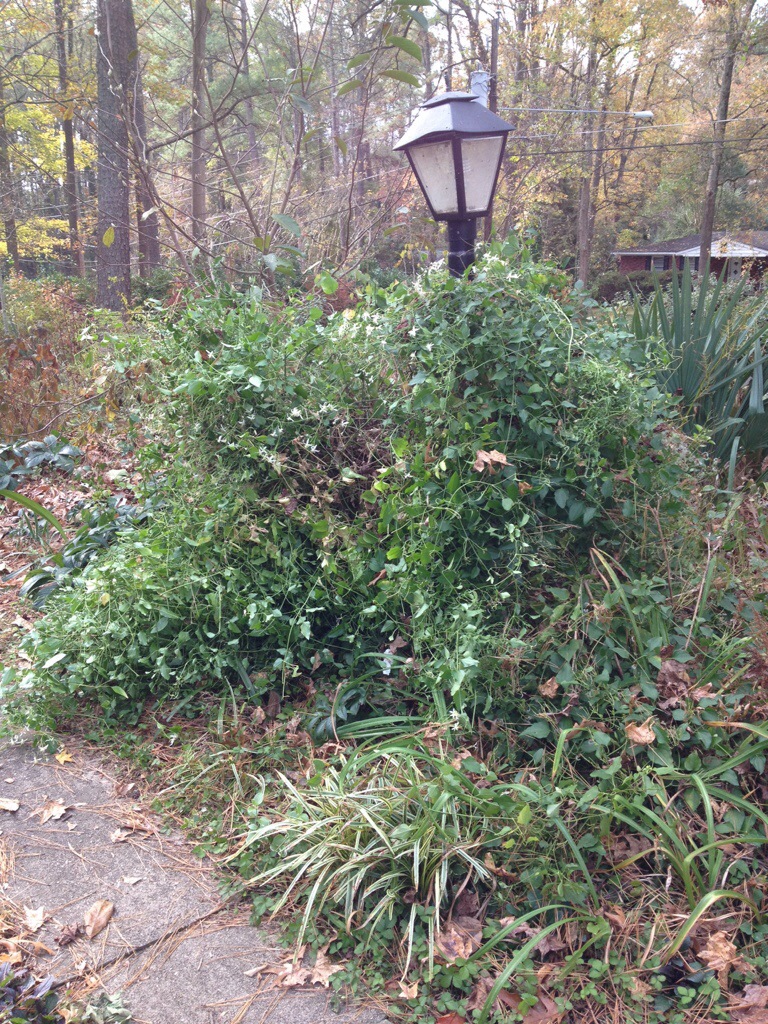
I have several around the garden thanks to the habit of reseeding. They have an unusual growth habit in that they grow throughout the Winter and by Spring can nearly cover structures such as the lamp-post. The one below I have posted several pictures in bloom before. They begin blooming in late August with very sweet-scented small white flowers.

Below, I had removed the huge mass off the top of the lamp. It was so heavy and thick it had warped the top of the plastic lamp and no light was comming through. I left a few stems to become the main vines for the coming season.
20131116-084235.jpg

After the month or so of flowering in August and September, these fluffy, white seeds form.

20131116-084309.jpg

Once the vines grow a few feet of new growth I will begin to train them around the post and each other. The vines have no tendrils but use their three lobed leaves to twist around and hold on to structures while climbing.

20131116-084342.jpg

This is a seedling which came up near the porch over the Summer. The seedlings have an unusual silver streak over the center vein of each leaflet.

20131116-084424.jpg

After raking the leaves from the oaks and sweet gums, I mulched the front beds. These leaves will decompose over the Winter. In the Spring I will pull the leaves back away from the hydrangea, perennials, and other plants in this bed to allow the new growth in Spring more exposure to the sun. Mulching not only keeps the grown moist during the Winter to prevent the roots from drying but also prevents the plants from heaving out of the ground during the freezing and thawing cycles. Heaving can be a problem where the ground freezes at night but the daytime temperatures are well above freezing like they are here in the Piedmont region on North Carolina. Moisture in the ground freezes and expands, pushing the plant up and out of the soil. The roots dry out and die. The mulch helps the soil to maintain a more even temperature.

20131116-084550.jpg

During the hot, dry Summers, the mulch helps the soil retain moisture and prevent weeds. The soil here has a high clay content and the organic matter will improve drainage, too.

20131116-084632.jpg

Most of the oak leaves have fallen and because it is usually the last tree to drop leaves, I may only have to rake a few times until Spring just to keep things clean and neat.

Soon the Hellebores and Witch hazels will be blooming!
11 Comments

Filed under General Gardening

First hard frost cleanup.

The first killing frost has occurred with temperature reaching about 27f last night.

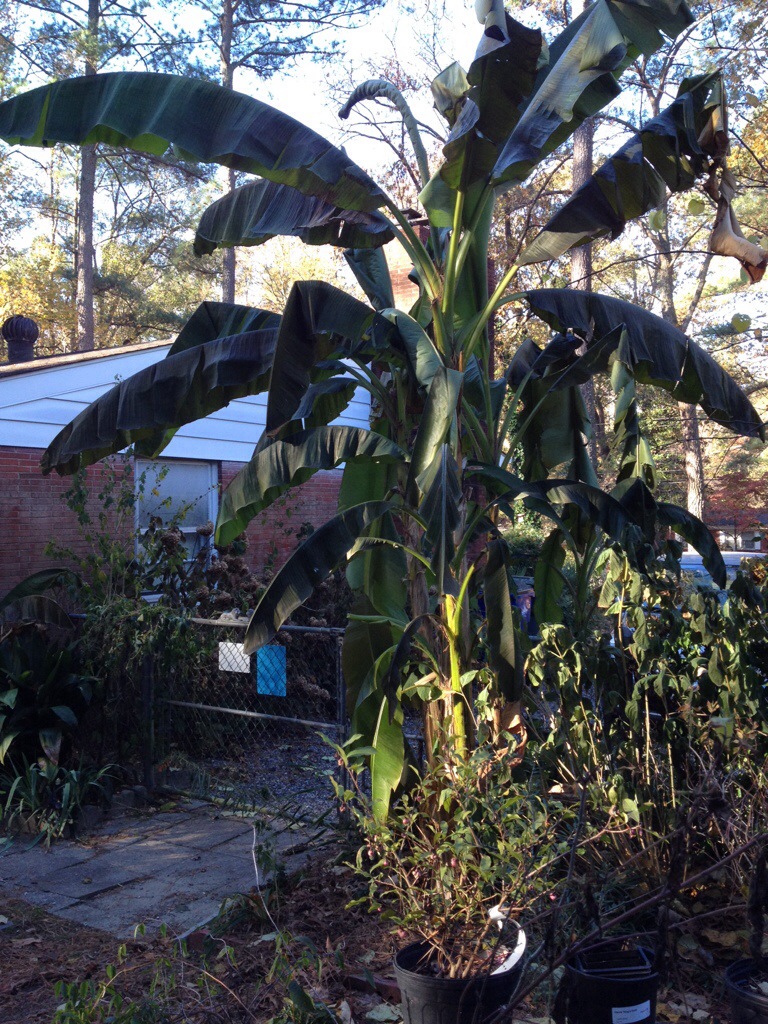
The Basjoo bananas are wilted and dark. The leaves are frost resistant and are not harmed until the temps are below 29f or so. The trunks will protect their growing buds and they will grow new leaves in the Spring from those buds. I will later remove the damaged leaves with sharp shears.

20131115-160759.jpg

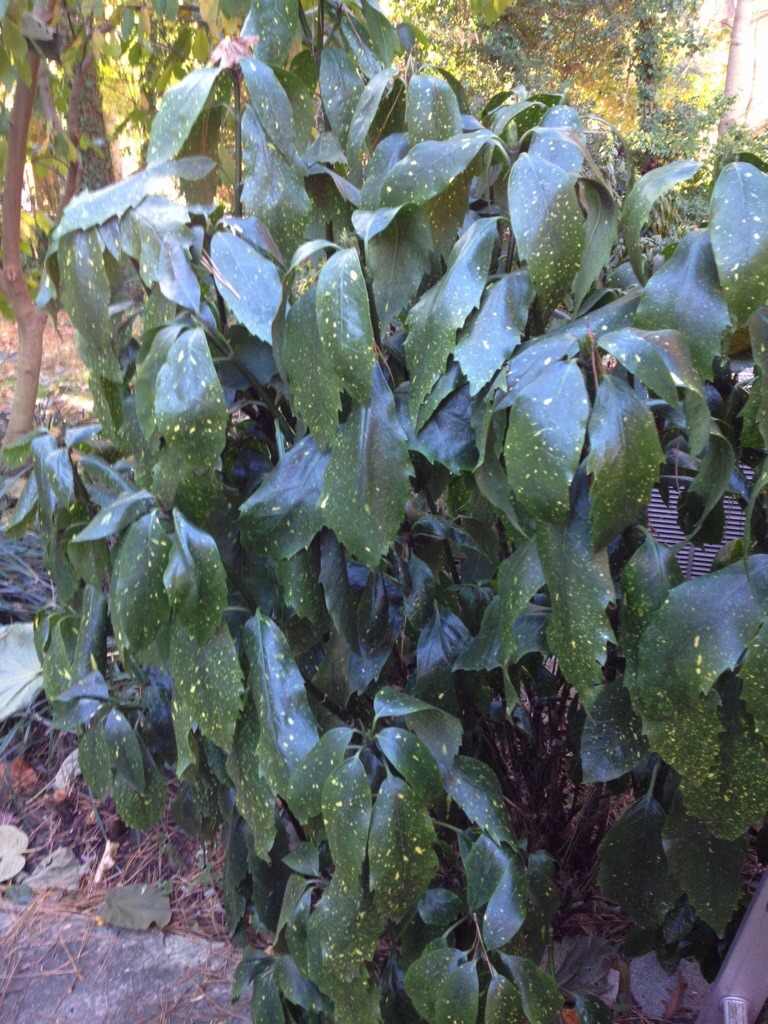
The acuba’s leaves will wilt when the temps are in the 20s to prevent the loss of water but they are not damaged by the cold. They return to normal when the temps go back above 30.

20131115-161544.jpg

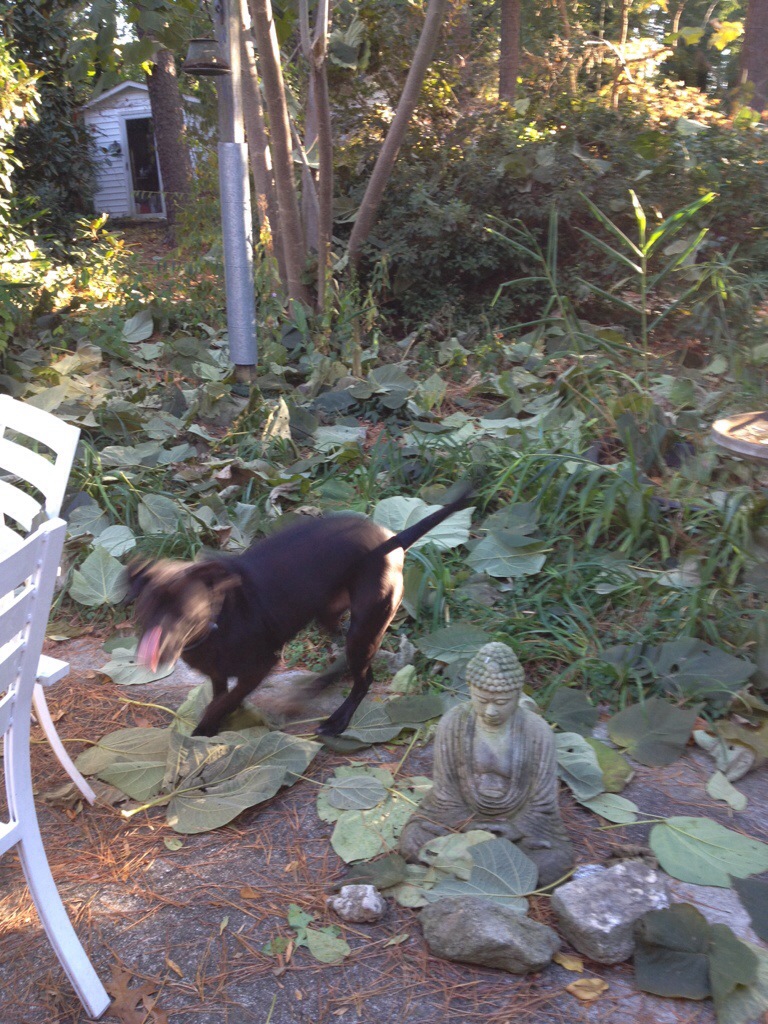
The low temps caused the Empress Trees to drop all their leaves at once. The leaves dry out in a few days and then they crumble and disintegrate to improve the soil. Gus enjoys looking under the large leaves for creatures.

20131115-161747.jpg

While removing frost damaged plants and raking leaves I discovered a dead vole. It’s rare to come across my arch nemesis! They have eaten every hosta and tiger lily I have planted!

20131115-162455.jpg

Of course, the cold mornings do not stop Gus from waking me up at dawn to go out!

20131115-162904.jpg

I rather have an iced double mocha latte from Cup A Joe!

20131115-163050.jpg

I think we can both get what we are looking for?

14 Comments

Filed under General Gardening, Gus

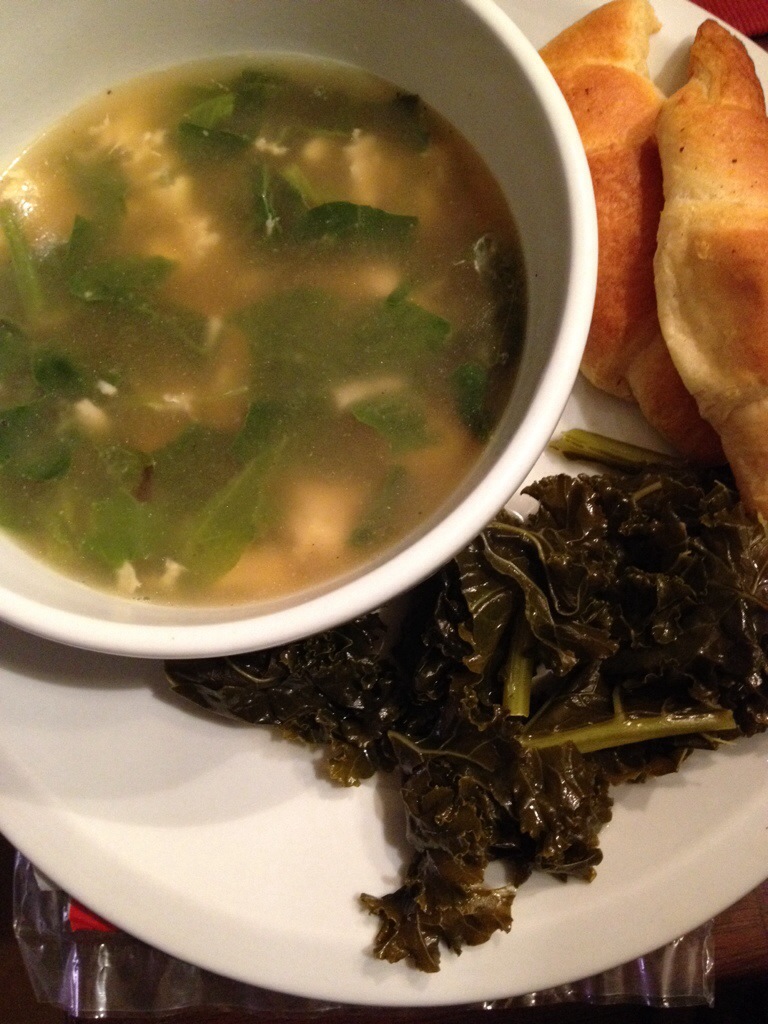
Stracciatella with spinach (Italian egg drop soup)

As usual, for a day when I am not working, I was up early and after a latte at Cup A Joe I headed over to the Raleigh Farmers Market! I grabbed a bag off spinach, a bag of kale, and a butternut squash.

20131109-124409.jpg

After a few hours of yard work I wanted something to warm me up. I love the Asian version of egg drop soup so the Italian version was perfect for the first cold day of Fall.

Stracciatella with spinach

Two boxes of chicken broth

Two large eggs

Two cups of spinich cut into ribbons.

Two tablespoons of fresh grated Parmesan

A handful of fresh basil- torn or cut into ribbons

Salt and pepper to taste

A clove of garlic – diced

One small onion- diced

1) Coat the bottom of a Dutch oven with olive oil and place on a medium high stove and add the onions and garlic. Stir to coat with the oil and cook until softened.

2) Add the broth and bring it to a boil. Roll the spinich leaves up and cut crosswise to form ribbons.

20131109-124501.jpg

3) In a small bowl, whisk the eggs, cheese, and herbs.

4) Reduce the heat to medium low and stir to get the broth circulating in the pot.

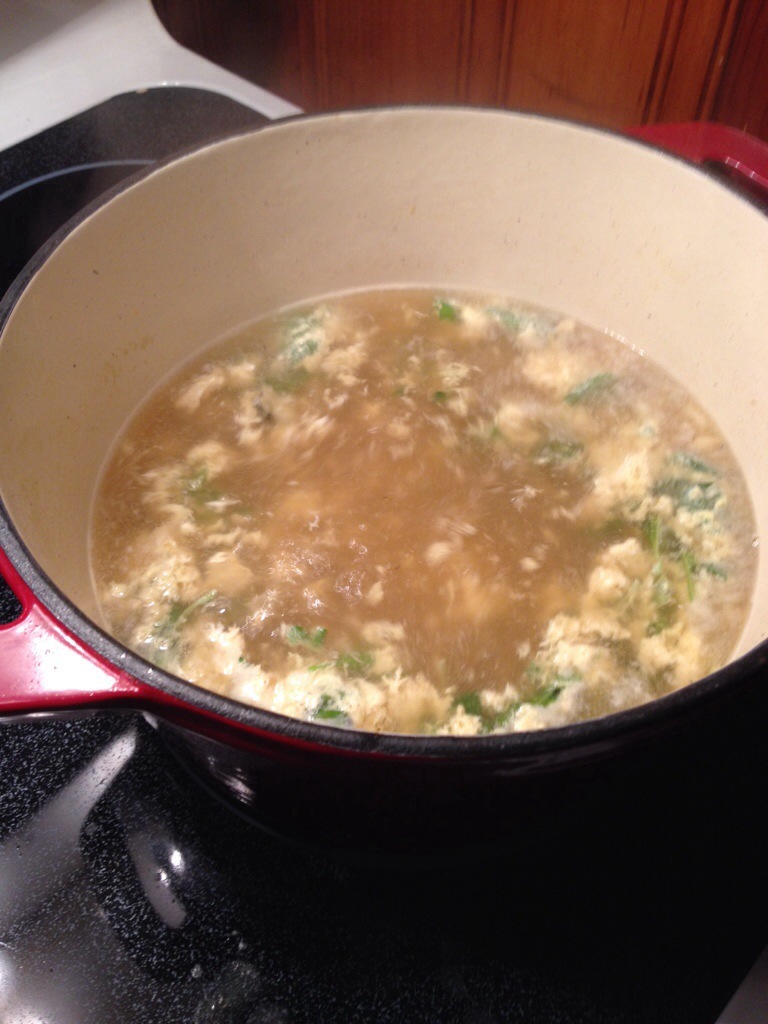
5) Drizzle in the egg mixture in a thin ribbon. You may need to stir with a fork to break any long strands of eggs which form as the eggs cook quickly one they hit the hot broth.

20131109-124531.jpg

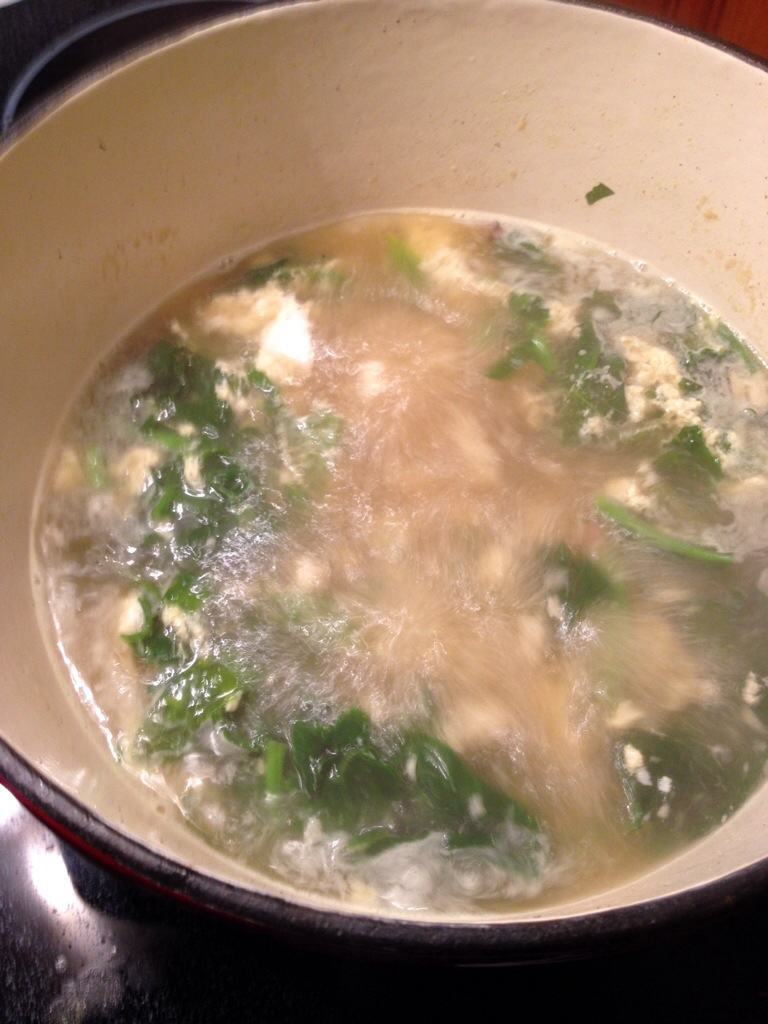
6) Add the spinach leaves and stir to incorporate.

20131109-124607.jpg

7) After a few minutes the leaves will wilt. 20131109-124633.jpg

8) Ladle into bowls and top with more freshly graded Parmesan. Serve with bread.

20131109-124715.jpg

I cooked the kale in water with some rice wine vinegar and served it on the side.

20131109-130549.jpg

The squash will be served later in the week with the remainder of the kale and spinich!

##

8 Comments

Filed under cooking, Food