Cumin flatbread

The mornings are still chilly and I don’t want to go straight in to the garden yet! I need something warm in my tummy first.

A quick morning Moroccan bread is just what’s in order!

Cumin Flatbread

20130309-103934.jpg1. Place warm water in bowl of heavy-duty mixer. Sprinkle yeast over and stir to
combine.

Let stand 10 minutes. This is proofing the yeast. If it doesn’t smell yeasty and become cloudy and foamy your yeast may be old and dead.

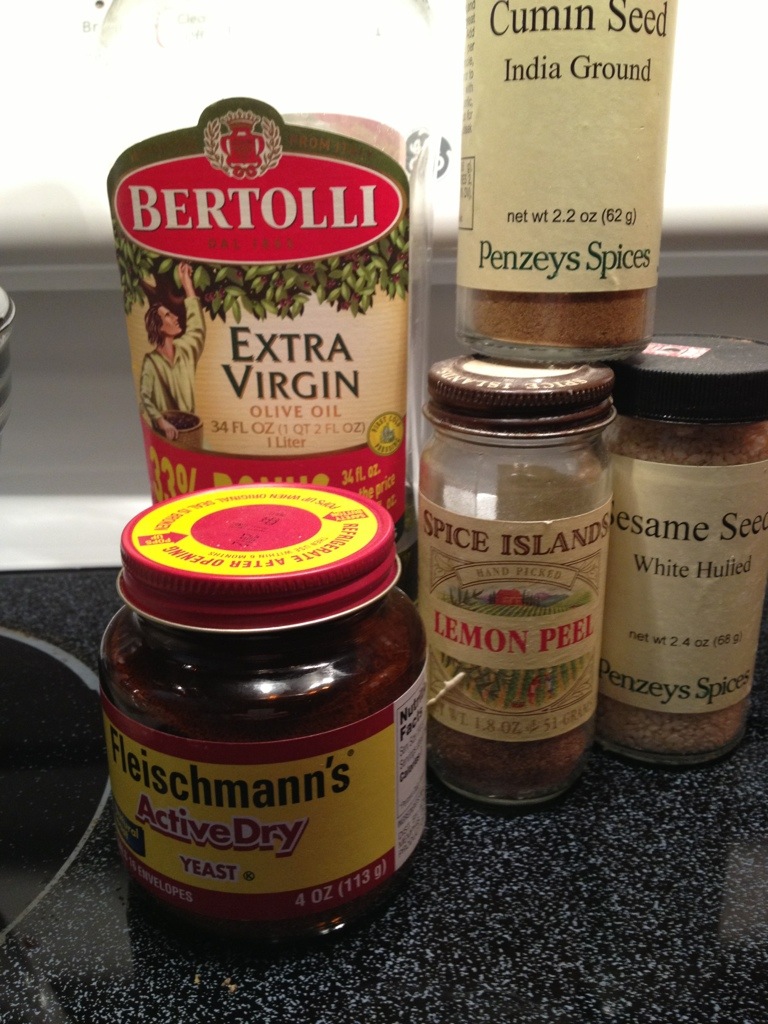
Add oil, lemon peel, salt and ground cumin.

Using dough hook attachment, gradually beat in flour. Continue beating 5 minutes.

Turn out dough onto lightly floured work surface and knead until smooth dough forms,
about 2 minutes (dough will be very soft).

20130309-103955.jpg

2. Lightly oil a large bowl. Add dough; turn to coat. Cover with a dish towel or plastic and let rise
in a warm draft-free area until doubled in volume, about 1 hour.

20130309-104013.jpg

3. Preheat the oven to 400°F Line 12×18-inch baking sheet with heavy-duty foil. Brush foil with oil. Place dough in pan. Using fingertips, press out dough, covering pan completely (dough will be very thin). Sprinkle with cumin seeds and sesame seeds. Bake until golden, about 30 minutes. Loosen bread from foil. Serve warm or at room temperature.

20130309-104033.jpg

Gus says; “Do I smell food?”

20130309-104146.jpg

Adapted from Bon Appetit “Taste of the World”, Conde Nast Publications, 2008
4 Comments

Filed under cooking, Food

The bay laurel gets a trim!

There comes a time every few years when the bay laurels (Laurus nobilis) need to be trimmed to prevent them from becoming trees. This usually happens to coincide with the need to restock the herb canisters with bay leaves for cooking.

The Mediterranean was once covered in wide-spread laurel forest but as the region became more dry the laurel forest are now only found in the mountains of Turkey.

The dry leaves are used to flavor many Mediterranean dishes during the cooking stage, although, the leaves are removed before eating as they remain sharp even after cooking and can cut the throat or mouth.

I often will drop a leaf in any soup or stew to add the deep flavor that I can only describe as a musky or woody flavor. A few in the cavity of chicken with lemons when you roast is a good use, too.

When they reach about 8 feet or so tall I will remove the tallest limbs down to about 18 inches. This keeps their height in check and also promotes branching.  I also take cuttings to root.

The cuttings are very slow to root and begin new growth. A year is not unusual.

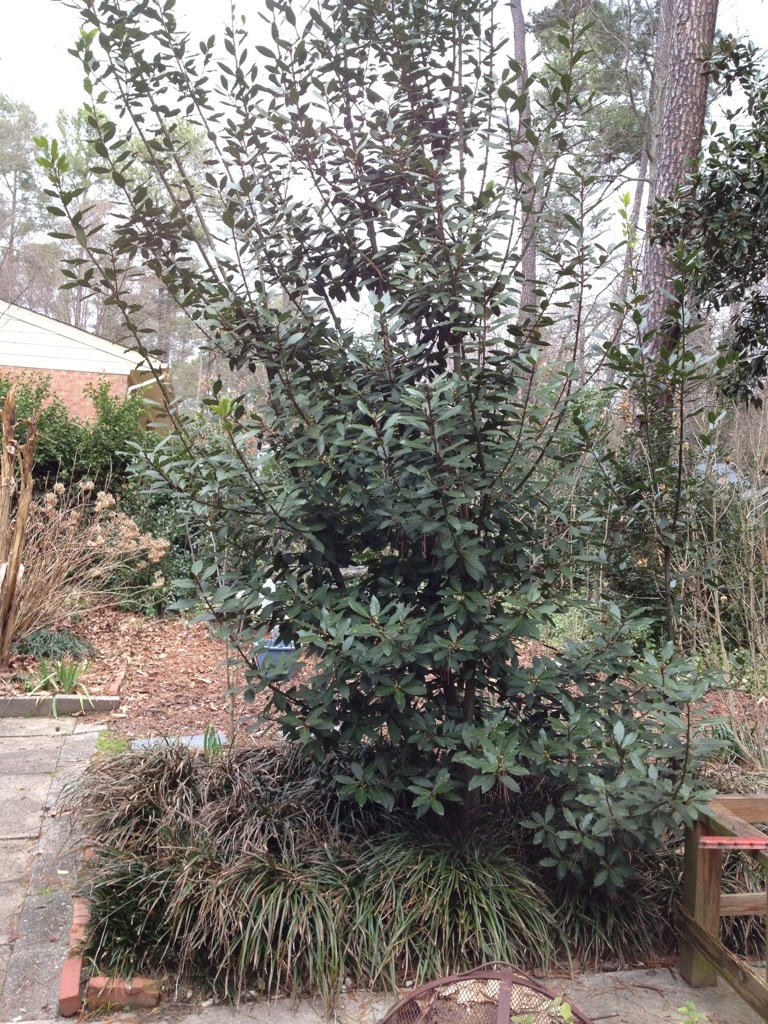
This is the largest bay in my garden which is on the north side of the patio. It is about 10 feet tall and 7 feet wide. It was a cutting from a tree in Morehead City.

20130303-095740.jpg

It produces small white flowers every Fall but they appear not to open and I have never seen any type of seed form. The laurel is dioecious which means male and female flower are on separate plants.

20130303-100217.jpg

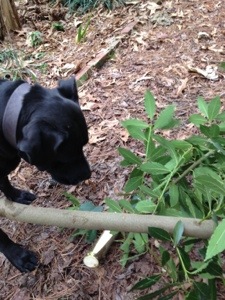
The leaves and stems are very fragrant. Even Gus cannot ignore the fragrance. Of course, he has to taste everything. I have to be careful he doesn’t try to swallow the wood as the splinters can become lodged in the throat or stomach.

20130303-100501.jpg20130303-100518.jpg

I begin by cutting the limbs off the main trunk.

20130303-100720.jpg20130303-100754.jpg

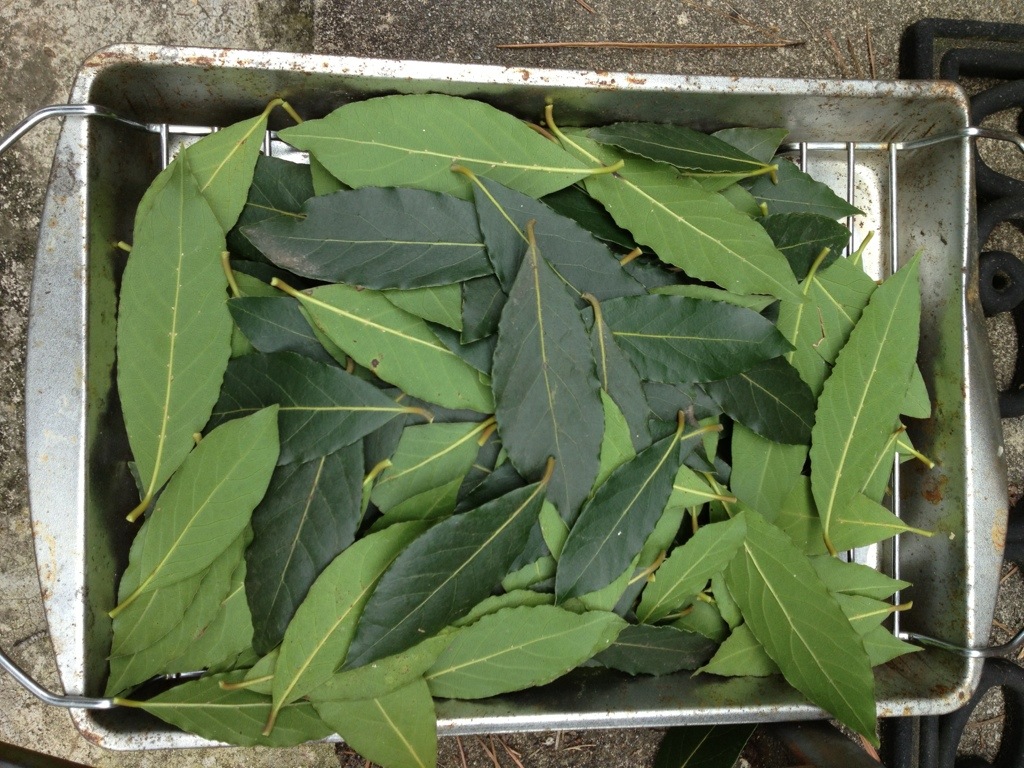
Then I cut those into shorter cuttings. The lower leaves are removed and saved for the kitchen.

20130303-100903.jpg

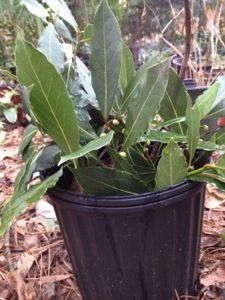
Since there is such a high number of failures with the slow rooting plants I plant the pots heavily. The pots are kept moist during dry weather and placed in a partly shady location. I usually leave them in the pots for two seasons before trying to potting them up individually.

20130303-101004.jpg20130303-100937.jpg

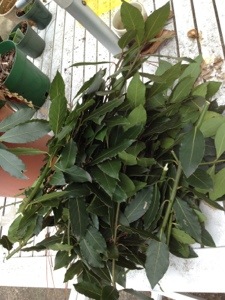
The leaves are dried by spreading them out in pans or baking sheets for a few weeks. Once they are dried you may store them in air tight containers or in paper bags.

They are also used to make wreaths and other seasonal decorations. You can keep bunches of then in closets for the fragrance. They will also stay attached to the stems and can be used for decoration in vases and arrangements.

20130303-101018.jpg

17 Comments

Filed under cooking, Plants, Seasonal Maintenance

More Spring bloomers and trimming of the beauty bush.

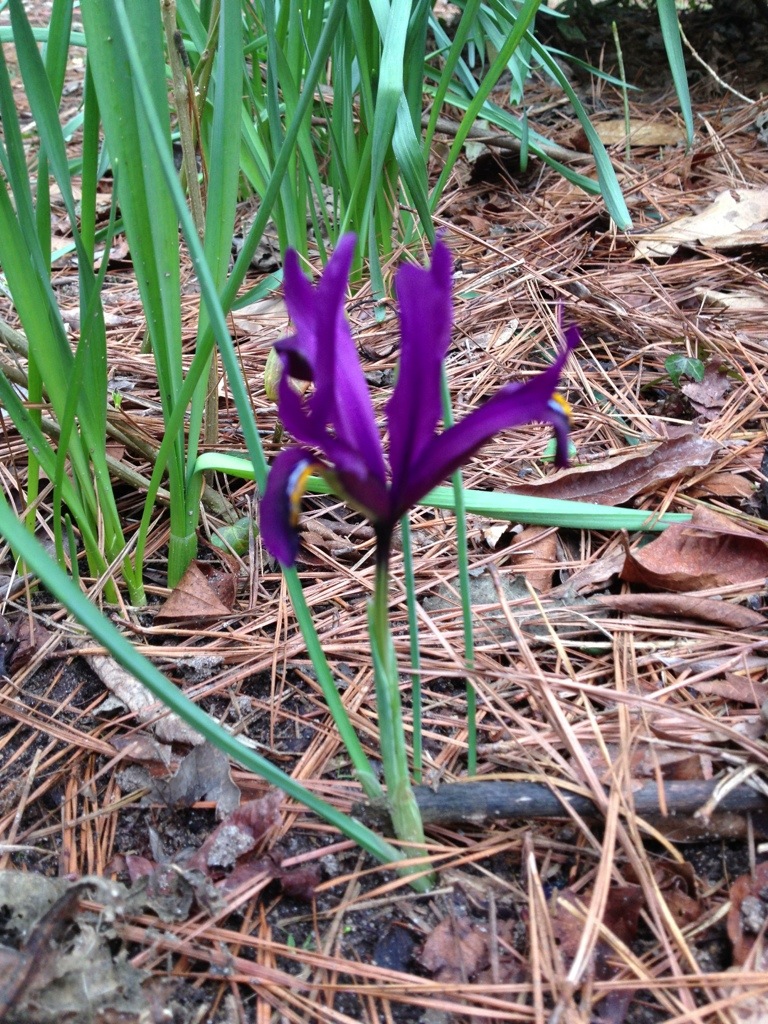
More Spring bloomers are making an appearance. Daffodils and crocus but also a Iris reticulata. This species tends to putter out after a few season and this is the only one I have seen this year out of the dozen I planted a few years ago.

20130228-125120.jpg

A unique daffodil:

20130228-125209.jpg

More daffodils:

20130228-em125253.jpg

Digging in the yard and garden of this house built in 1959 I find many unusual things.

I found this sock today in the vegetable garden. The raised beds were filled with bags of garden soil years ago so I guess it has been in there for a few years!

20130228-125759.jpg

A few days ago I was leveling a stepping stone a mole had disturbed and found concrete with a pipe sticking out of it. I guess the previous owner had some sort of bird feeder or plant hanger? Or she may have placed it there to support this camellia?

20130228-130111.jpg

I usually find a brick or a piece of pipe placed next most of the old shrubs in the yard. When the neighborhood was built in late 1959 this was way out in the country! Now it is only a few miles from the old downtown area.

8 Comments

Filed under General Gardening, Plants